
The cycle of Poverty and its Psychological Toll in Less Developed Countries

Unfortunately, many citizens of less developed countries grow up poor with no chance of escaping out of misery. Throughout the world, countless people live in places that force them to limit themselves to local economies (approximately 21 million people). They have been accustomed to believing that the place where they were born determines their value as human beings. For that reason, the majority of men, women, and children living in impoverished communities in third world countries, keep sinking further into poverty for generations. Unfortunately, the environment they live in will shape their destiny; for the most part, they will be enslaved to a life-cycle of poverty. Nonetheless, even poor people dream of having a decent life, if not a rich one.

In poor communities of the less-developed nations, people work arduously to provide for their loved ones. They work long hours under hideous and unregulated conditions and yet are not paid enough to take bread home. The majority of the poor people living in the least developed countries have known poverty their entire lives. Because of that, they start thinking that being poor is their fate. These people, living in hardship, develop a fatalistic mindset because there is no hope for a brighter future inside their communities. No government programs support millions experiencing poverty. For example, there are no social welfare programs, no free medical insurance, and not even unemployment benefits to protect the general public. The public education systems are broken and are not supported by the government. Public hospitals lack medicine and personnel, and the equipment they work with is old and outdated, making it difficult to treat patients properly. Many companies from the private sector have taken advantage of globalization to mold and further impoverish less-developed nations, like Honduras.

The Private Sector of Honduras
It is well known that inequality hurts and weakens societies. In particular, inequality creates cohesion and puts in question the integrity and development of the government. Honduras is one of the poorest countries in Latin America, with one-third of its population being underemployed. Their economy has been impacted by the high levels of inequality, creating unhappiness amongst its citizens. Many Hondurans are not reaching their full potential at work because they live under the yoke of a corrupt and oppressive dictator, Juan Orlando Hernandez. His government has done nothing to decrease the high levels of inequality in the country neither protecting the poor, taking into consideration that’s the majority. Hernandez’s policies have damaged the economy of the country. From selling the national electric company (EeH) to foreign investors in Colombia to reelecting himself to a second term, even when it was prohibited by the constitution. Also, Hernandez’s government annual budget for education and health are 3.8%, while the budget for national security is 7.1%. His government does not care about educating the population nor providing a quality health care system. But spending on the military means protection for himself, and power amongst revolts from Hondurans who search for freedom.
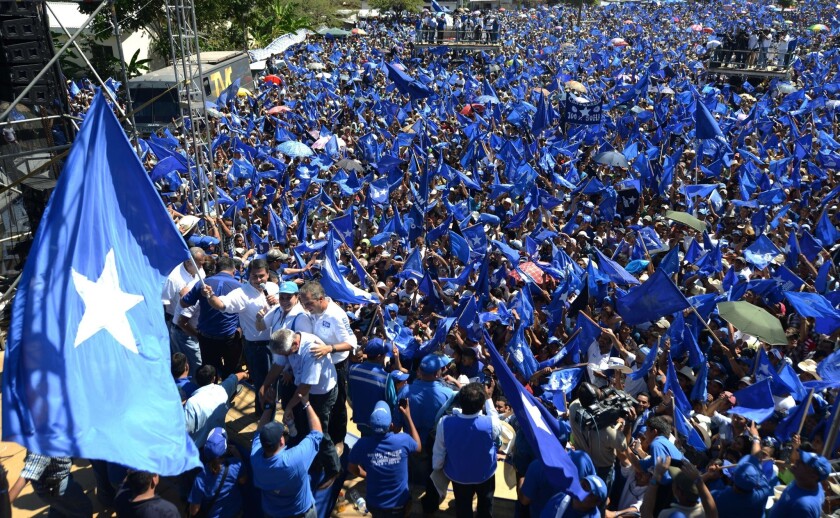
The private sector dominates the economy of the country. For example, it is 75% of the economy in Honduras that is controlled by five powerful families. Starting with the most influential businessman in Honduras, Mohamad Yusuf Amdani Bai, the president of “Grupo Karim” who actually is a believer in capitalism. His several companies are in charge of the textile, hotel, and real estate industries in the country. Following, Camilo Alejandro Atala Faraj, the executive president of “Grupo Financiero FICOHSA” dominates the financial services of the nation. Also, he controls the majority of the supermarkets known as “Supermercados La Colonia.” Besides that, within the hotel industry, his group manages Indura Beach Resort, the largest Caribbean public-private investment company. Mr. Faraj has molded to monetary policies of the country to advance his private businesses. A third established businessman, Miguel Mauricio Faccusse, is a wealthy man within the country, whose fortune is due to the multiple businesses tide the government. Some of his companies are well-recognized food products such as Zambos, Yummies, Mazola, and Issima. In fact, he is the owner of huge amounts of land across the entire country. Faccusee has benefited from the free land that he confiscated from the local people. Our fourth person is Fredy Antonio Nasser Selman, a Central American businessman, who is also the owner of “Grupo Terra.” He is responsible for controlling businesses that are related to energy, concessions, and the communications sector. He also owns the Honduran airports and manages almost every energy sector of the gas stations known as “Uno.” It is most interesting that he controls the petroleum of Honduras, known as HonduPetrol. He has monopolized the entire communications of the country. Finally, we have Jorge Canahuati Larach who consolidated his economic power in the area of communications. Currently, he is the owner and president of all the newspapers in Honduras. Some of the most popular newspapers are OPSA, La Prensa, El Heraldo, Diez, and Estilo group. He also has strong investments in the bottling, food franchise, and pharmaceutical sectors. Mr. Larach mainly contributed with several amounts of money to the current president to maintain his status within the society.
How to Fix the Problem
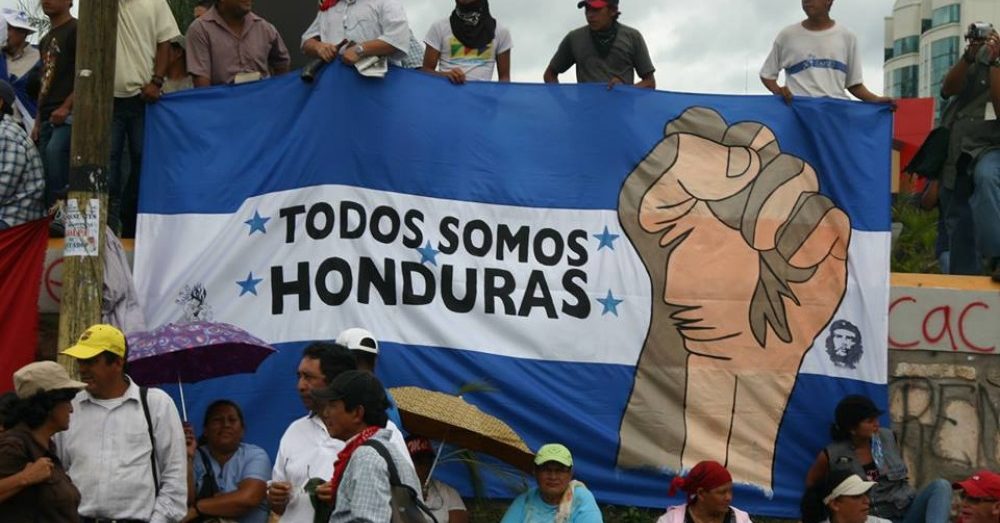
There is only one viable solution to defeat the current levels of inequality, poverty, and corruption in Honduras—democracy. At this point, providing solutions to fix the economy of Honduras will be useless until society rises against the current government, just as French people did in 1789, during the French Revolution. Unfortunately, today, Honduras is broken; what is required is democracy for the people, by the people. The proletariat must rebel to overthrow the current bourgeoisie who disguise themselves as friends of the poor. Honduras is a dystopia. It is the duty of those affected by the yoke of impoverishment who must protest in order to achieve real change; until then, the country will not rise from the ashes.
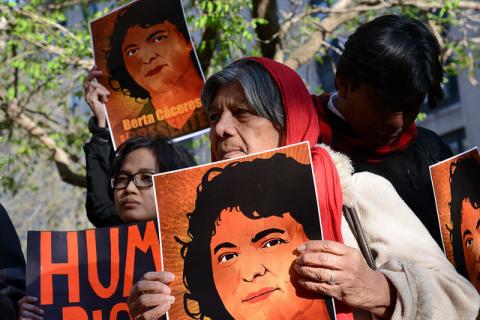
Honduras must fight to have real autonomy. The United States must not govern the land in Honduras. Therefore, they need to leave for the country to grow. The country’s current suffering is largely a result of the U.S. refusing to release Honduras from the same old ties and false promises of economic prosperity. The narco-state that currently governs the country must be punished for the mayhem it has caused. The Honduran government refuses to acknowledge the mistakes that it has caused over the years. The government has murdered vast amounts of innocent people who rebelled against its oppressive regime, causing the separation of many families, and stopped many dreams from being realized. Inequality, crime, and corruption are rampant in Honduras because of an unwillingness to protect the poor. The reality of this so-called democratic third-world country is that the elite benefit at the expense of the impoverished. As long as a blind eye is turned to the pain and agony of those suffering under oppression, the Honduran people will never escape those origins.
 Enritron